
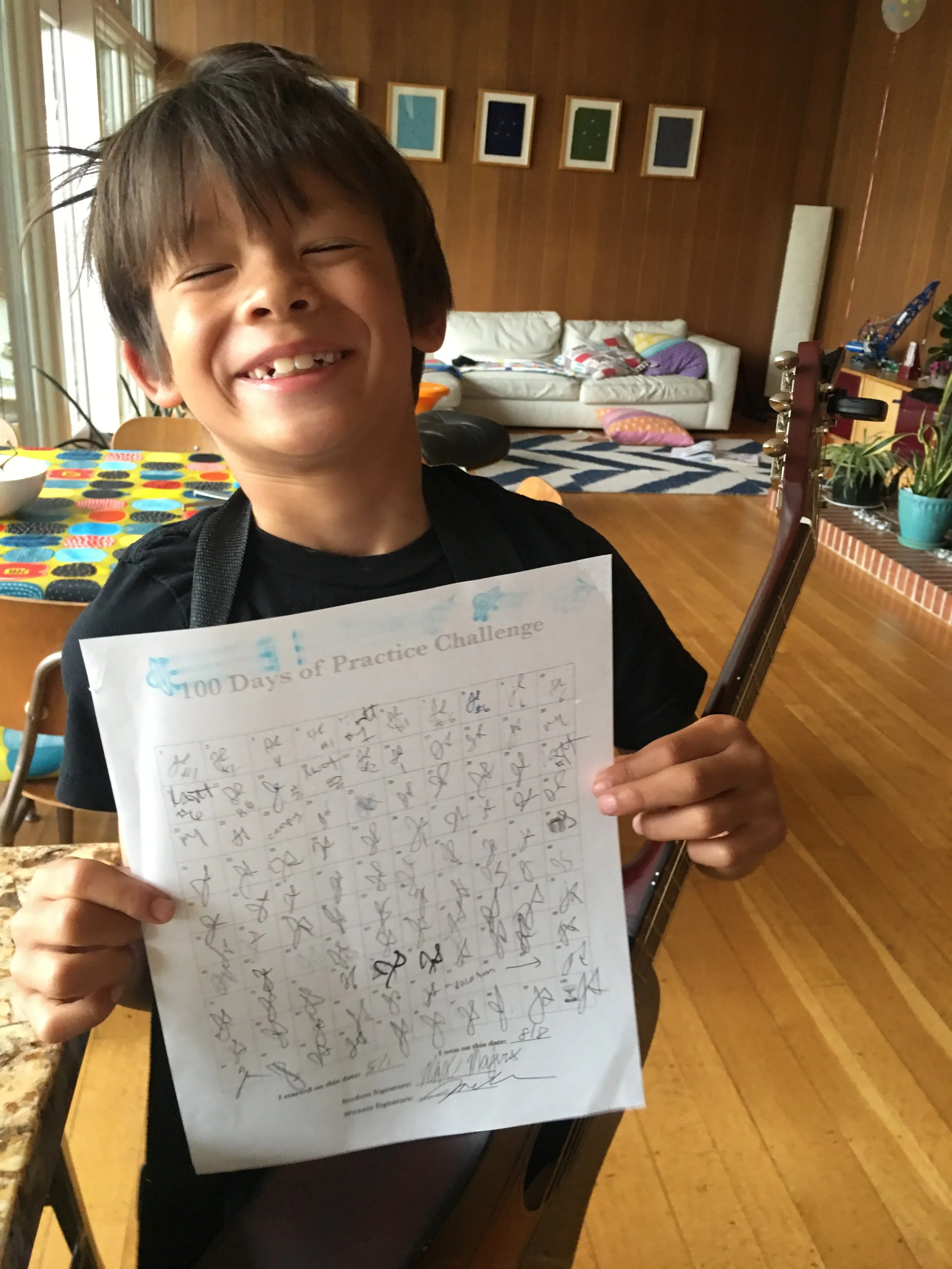
Of Course Your Kid Doesn’t Want to Practice… And That’s Okay
Let’s start with something honest:
Most kids don’t wake up excited to practice guitar. And that’s normal.
If your child groans when it’s time to practice, drags their feet, or says “I don’t feel like it,” it doesn’t mean they aren’t musical. It doesn’t mean they chose the wrong instrument and it definitely doesn’t mean they should quit, it just means they’re a kid.
The real difference between kids who stick with guitar and kids who quit usually isn’t talent. It’s not even motivation, it’s progress, and progress comes from small, consistent practice habits, not from waiting until they “feel like it.”
Let’s talk about how to help your child build those habits without turning your home into a battleground.
1. Shift the Goal: From “Practice” to “Progress”
When kids say they hate practicing, what they often mean is:
“This feels hard.”
“I don’t feel like I’m getting better.”
“This is frustrating.”
Practicing without seeing improvement is discouraging. But practicing with visible wins? That’s empowering.
Instead of asking:
“Did you practice?”
Try asking:
“What got a little better today?”
Even a small win counts:
A cleaner chord change
Playing one measure without stopping
Memorizing the first line of a riff
Progress fuels motivation. Motivation rarely fuels progress.
2. Make It Short Enough to Win
One of the biggest mistakes parents make is thinking practice needs to be long to “count.” It doesn’t.
For most kids:
10–15 focused minutes is powerful.
20 good minutes beats 45 distracted ones.
Daily consistency beats marathon sessions once a week.
If practice feels overwhelming, shrink it. It’s better for your child to succeed at 10 minutes every day than fail at 30 minutes three times a week.
Success builds identity:
“I’m someone who practices.”
That matters.
3. Separate Feelings From Decisions
This is big.
If your child says, “I don’t want to practice,” you can calmly respond:
“I understand. You don’t have to want to. But we’re still going to do 10 minutes.”
We don’t let kids skip brushing their teeth because they’re not in the mood. Practice can be similar — a small, expected daily responsibility.
The key is tone.
Not:
“Why are you so lazy?”
Not:
“If you don’t practice, we’re quitting.”
Just calm consistency.
Feelings are allowed.
Quitting because of feelings is optional.
4. Create a Simple Practice Structure
A lot of complaining comes from not knowing what to do.
Instead of “Go practice,” try giving structure:
A simple 3-part practice:
Play something you already know (confidence)
Work on one small hard thing (growth)
End with something fun (reward)
This keeps practice balanced and positive.
When kids only struggle, they burn out.
When they only play easy stuff, they stall.
We want both.
5. Yes — You Can Reward Practice (And It Works)
Some parents hesitate to reward practice because they worry:
“Shouldn’t they just want to do it?”
In a perfect world? Maybe.
In the real world? Incentives work — especially while habits are forming.
Think of rewards as training wheels. The goal isn’t to bribe forever. The goal is to build consistency until progress becomes its own reward.
Here are simple systems that work incredibly well:
Trade practice for screen time
15 minutes of focused practice = 15 minutes of screen time
No practice = no bonus screen time
This keeps it clear, measurable, and neutral. No arguing. Just math.
Micro-rewards for reps
For younger kids especially, this can be powerful:
5 clean chord changes = 1 Skittle
3 scale repetitions = 1 M&M
10 perfect strums = 1 point toward a small prize
It turns repetition into a game instead of a grind.
Weekly streak rewards
Practice 5 days this week = choose Friday movie
2 full weeks of consistency = small toy or special outing
The key is consistency over intensity.
A quick note on rewards:
We’re not rewarding talent.
We’re rewarding effort.
Over time, something interesting happens:
The external reward fades…
And the internal reward grows.
When kids hear themselves improving — cleaner chords, smoother rhythm, real songs taking shape — that feeling becomes addictive in the best way.
That’s when practice shifts from:
“I have to.”
to
“I can.”
And that’s where long-term musicians are made.
6. Don’t Let Quitting Be the First Solution
Here’s a pattern we see all the time:
Kid complains about practice.
Parent feels bad.
Parent says, “Okay, maybe this isn’t for you.”
Child quits.
A few months later, they regret it.
Most kids don’t quit because they hate music.
They quit because:
It got challenging.
They weren’t improving.
Practice became emotional.
Learning to push through something mildly uncomfortable is a powerful life skill. Guitar is a safe place to build that muscle.
Sometimes what your child needs isn’t permission to quit.
It’s support to keep going.
7. Make Music Social
Kids stick with activities that feel connected.
Encourage:
Playing for family (even one song)
Recording themselves and hearing progress
Joining camps or group programs
Learning a song they actually care about
When music becomes something they share, it becomes more meaningful.
Final Thought
If your child doesn’t love practicing every day, that’s okay.
They don’t have to love it.
They just need:
Small wins
Clear structure
Calm consistency
Support when it gets hard
The kids who stick with guitar aren’t the ones who never complain.
They’re the ones who learn how to move forward anyway.
And when they look back a year from now and realize how much better they’ve become, they won’t remember the complaints.
They’ll remember that they didn’t quit. 🎸