
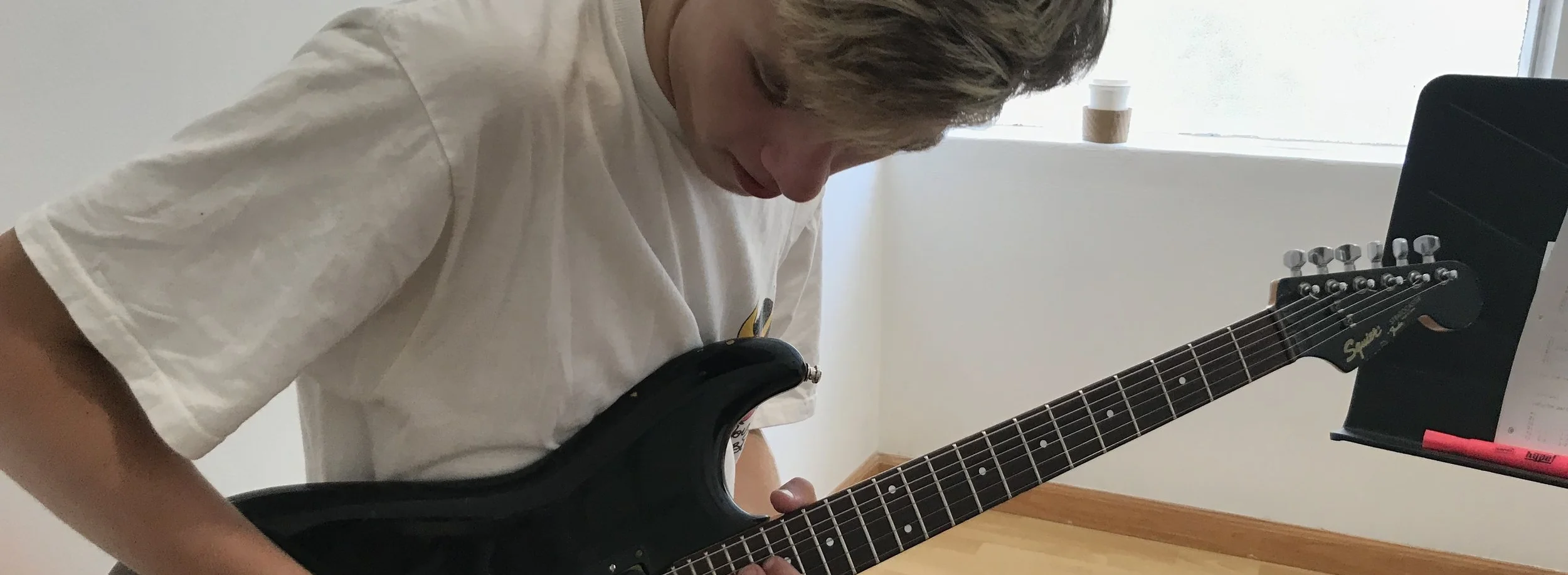
What Should You Practice on Guitar? A Simple Plan That Actually Works
One of the most common frustrations I hear from both kids and adults is this; “I sat down to practice… and didn’t really know what to do.”
That usually leads to one of two things; playing the same thing over and over, without improving, or avoiding practice altogether
The fix isn’t more time, it’s having a simple plan.
Here’s an easy, effective way to structure your practice so you actually make progress, without overthinking it.
1. Start With Something You Already Know
Begin with something familiar…a song, a riff, a chord progression you’ve played before.
This does two important things:
builds confidence
warms up your hands
It also reminds you, “Oh yeah, I can do this.” Keep this part short, about 2 to 3 minutes.
2. Work on One Small Challenge
This is the most important part of your practice. Pick one thing that needs improvement:
a tricky chord change
a small section of a song
a scale or exercise
a rhythm that feels awkward
The key word here is small. Not the whole song. Not everything at once. Just one section.
Slow it down, repeat it, and focus on doing it cleanly.
This is where real progress happens.
3. Slow It Down More Than You Think
Most students try to play things at full speed too soon. That usually leads to:
mistakes
frustration
reinforcing bad habits
Instead, slow it down until you can play it correctly. Then repeat it.
Clean and slow beats fast and sloppy every time. Speed comes later.
4. Repeat With Purpose
Repetition is necessary, but only if it’s focused. Instead of mindlessly playing something 20 times, try this:
play it once
notice what went wrong
adjust
play it again
That small moment of awareness makes repetition effective.
5. End With Something Fun
Finish your practice with something you enjoy.
play a song you like
improvise
revisit something that feels easy
This helps you leave the session feeling positive and that feeling matters.
It’s what makes you want to come back tomorrow.
6. Keep It Short and Consistent
You don’t need long sessions., 10 to 20 minutes is plenty for most students.
What matters is showing up regularly. A simple structure like this, done consistently, leads to steady improvement.
Final Thought
Good practice isn’t about doing more, it’s about doing the right things, in a simple, repeatable way.
If you:
start with something familiar
focus on one small challenge
slow things down
repeat with purpose
end on a high note
you’ll get more out of 15 minutes than most people get out of an hour and over time, those small, focused sessions add up to real progress. 🎸